
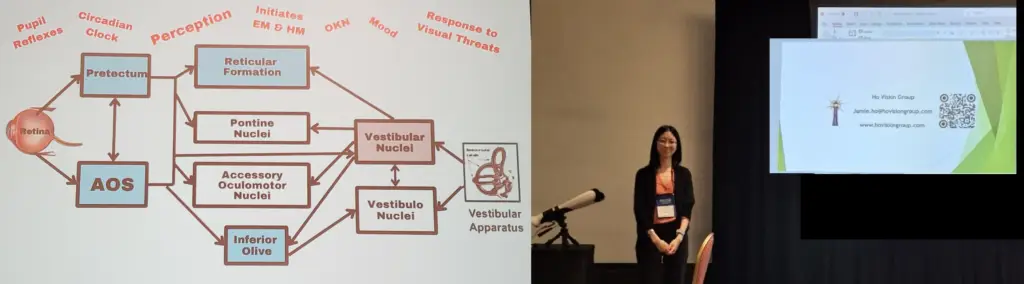
Light does more than help us see. When light enters the eyes, it sends signals through the retina to important brain pathways, including the hypothalamic tracts. These pathways help control sleep, cognition, mood, focus, heart rate, and stress. In simple terms, the kind of light we are exposed to can change how our nervous system works and how our body feels each day.
This powerful connection between light and health was the focus of the 92nd International Conference on Light and Vision, held in Tucson, Arizona. This conference brought together experts from around the world. The goal of the meeting was to further understanding of how light, as a form of energy and frequency, influences human function.
Key themes of the conference included:
- Optometric syntonics, which uses light frequencies introduced through the retina
- Frequency entrainment, showing how light and sound can help the brain find balance
- Artificial light exposure, including how screens and indoor lighting affect health
- The nervous system, and how light impacts body functions beyond vision
The conference program highlighted both research, real-world clinical applications, and unique cases where light was used as a therapeutic tool. This balance allows doctors to take new ideas from science and apply them directly to patient care.
Dr. Ho’s talk: Autonomic Nervous System and Heart Rate Variability Considerations for Evaluating Syntonic Filters gave a live demonstration how heart rate variability (HRV) and physiological coherence can immediately be impacted by therapeutic colored filters. Optometric syntonic therapy is based on the ability of the autonomic nervous system (the system that controls automatic body functions like heart rate and breathing) to respond and change function after light exposure. HRV devices, such as Heartmath, can offer an additional insight when choosing colors for patients with traumatic brain injury or other neurologic compromises who cannot tolerate traditional assessment methods of testing.
Readers interested in learning more about this approach can explore Dr. Ho’s earlier work here that was first presented at COVD 2023 in Toronto, Canada outlined in previous blog post: Heart Rate Variability and Syntonic Phototherapy https://hovisiongroup.com/heart-rate-variability-and-syntonic-phototherapy/
One of the most important messages from the conference was that light affects much more than eyesight. Light can influence:
- Sleep and circadian rhythm
- Focus and attention
- Emotional regulation
- Stress levels and physical tension
Understanding these effects allows doctors to provide more personalized care. By choosing the right light frequencies, clinicians can support not only visual comfort but whole-body balance.
Dr. Ho’s attendance at the International Conference on Light and Vision reflects a strong commitment to ongoing education and evidence-based care. Conferences like this help ensure that patients benefit from the most current research and clinical tools available. By staying at the forefront of light and nervous system science, Dr. Ho continues to advance how vision care can support overall health, performance, and well-being—one frequency at a time.