
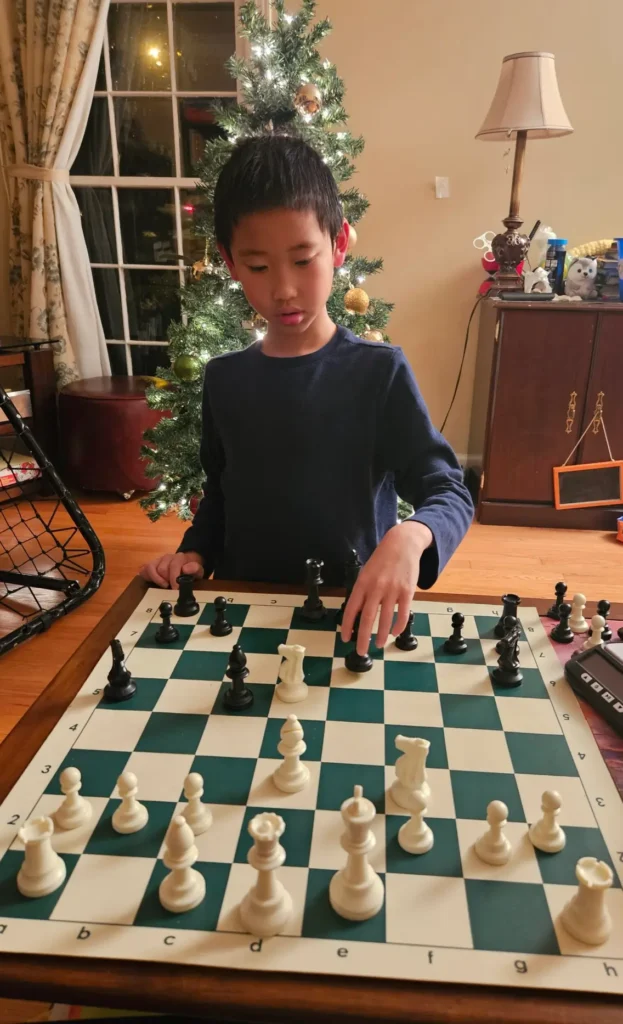
Visual perception as your brain’s way of turning what your eyes see into what you understand.
It is the visual skills that answers the question: “What am I looking at?”
In chess, players don’t just look at the board – they see, remember, and imagine future moves. Some of the visual skills used in chess include:
-
Visual Memory – remembering patterns and combinations
-
Visualization – imagining how the board will look in the future
-
Figure Ground – the ability to find relevant moves when there are many distracting pieces
For amateurs, chess may seem to be made of many random moves. You can have perfect visual acuity (the ability to see all the pieces), but if your brain is not able to make sense of what you are looking at, the value of vision quickly becomes lost.
In contrast, more advanced players who spend time studying the game are able to recall meaningful patterns of offense and defense strategies.
Good chess players do not have perfect memory – they have task-specific trained memory. As many of you know, Dr. Ho often jokes about how her son, who is a competitive chess player, can recall chess moves from games played 2 days ago yet loses his water bottle at school frequently.
Visualization is a skill that benefits all people. It is the ability to picture future moves in your head. This skill helps players predict their opponent’s plans, avoid mistakes and traps, and plan attacks several moves ahead. It is like watching a movie of the game before it happens.
Figure-ground is the ability to find an object of interest among clutter. Think about finding your favorite snack in a pantry filled with food or finding your loved ones in a crowd. Patients who lose this ability after a brain injury or from neurodegeneration often get lost and confused in their daily life despite being able to see and identify objects in isolation.
The ability to use all the visual perceptual skills well together helps turn vision into winning chess strategies!
Some fun facts about chess from research:
-
-
Eye-tracking studies show that expert players look at the board differently. They focus less on individual pieces and more on important relationships between pieces.
-
The fusiform face area (FFA), typically used for recognizing human faces, gets significantly activated in expert chess players to process complex chess patterns
-
Players who compete in blindfold chess rely heavily on visual working memory and mental imagery, even without seeing the board.
- Regular engagement in challenging mental activities like chess can reduce the risk of dementia and Alzheimer’s, particularly in individuals over 75
- Mental stimulation, such as playing chess, acts as a neuroprotective, slowing the natural decline of cognitive abilities.
-
Remember, playing chess is no different from practicing vision therapy skills since practice makes progress! Visual skills are developed through practice, experience, and regular training.